

Role
UX/UI Designer
Tools
Figma, Illustrator
PROBLEM
Users spend a long time finding their missing items.
Finding lost items can take minutes, even hours to find. Many individuals struggle with the frequent problem of misplaced everyday items such as keys, wallets, clothing, chargers, or important personal belongings. This problem creates people to give up on searching for their item and instead spend more of their money to replace it.
The people most affected by this problem include students, older adults, and individuals with disabilities. For many users, losing an item can create frustration, wasted time, stress, and disruption to daily routines. For individuals with mobility, visual, or cognitive impairments, locating misplaced belongings can be even more difficult and may reduce independence or increase reliance on others for assistance.
SOLUTION
Mobile Visual Locator
A mobile app that leverages the phone’s camera to scan and map spaces (rooms, outdoor areas) to help users locate misplaced items.
This solution addresses the pain points of time wasted, frustration, and dependency for users like the elderly, disabled, or clumsy individuals.
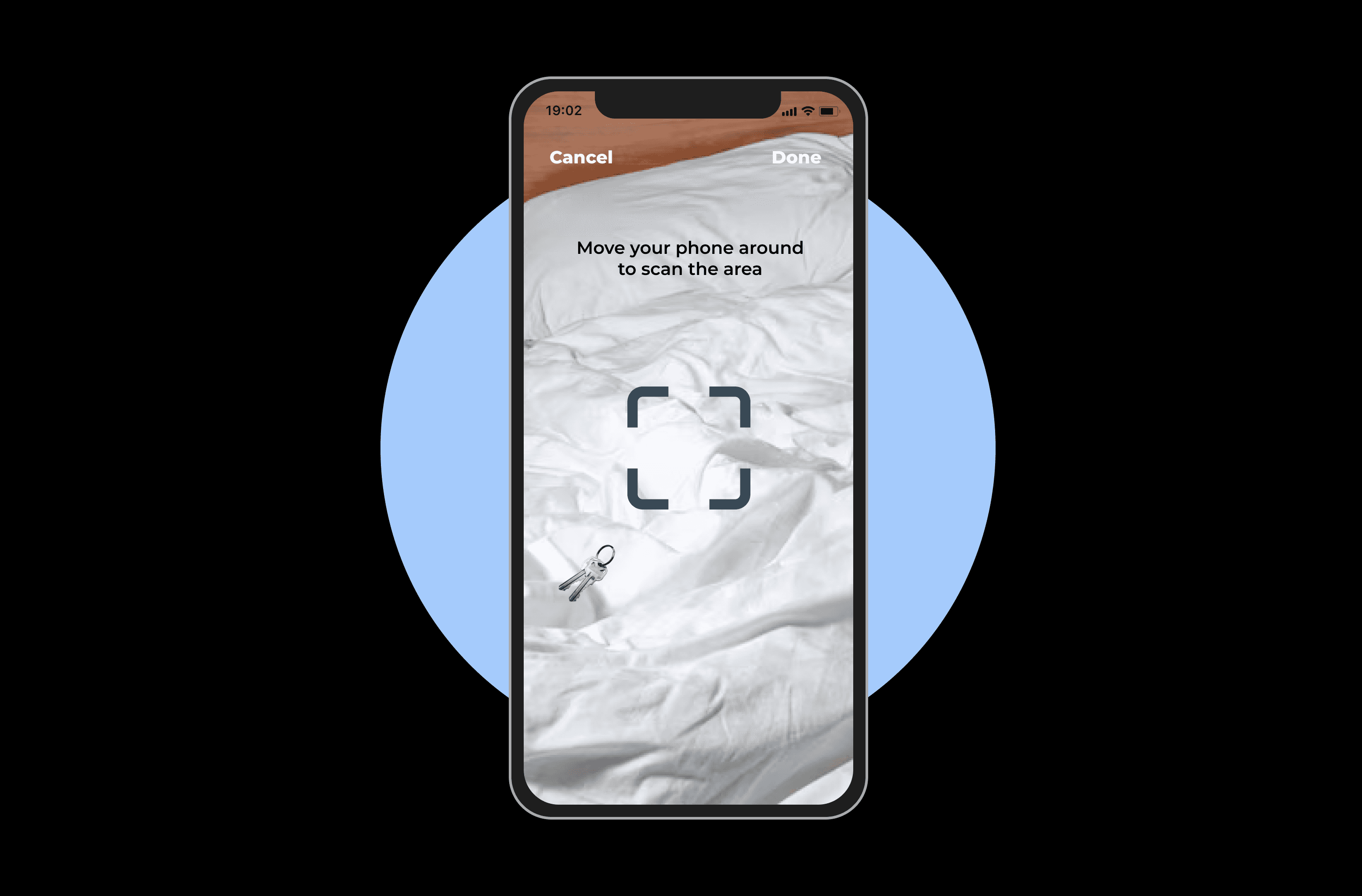
Scanning:
Scan a room to log items in a virtual inventory.
Using augmented reality (AR) and object recognition, the app logs belongings in real-time, so users can instantly see where they last placed their keys, wallet, etc.

Saved List:
Virtual Inventory – A personalized list of frequently lost items that users can add, edit, or remove.
Item Tagging – Users can label items with photos, names, and categories for quick identification.
Reminders & Alerts:
Notifies users to locate commonly lost items.

RESEARCH
User Needs and Competitive Analysis
Through interviews with elderly users, individuals with disabilities, and students, I was able to understand their pain points and needs.
Quick and Easy Search: Users need a way to locate items without manually searching for hours.
Accessibility: The app must be usable by individuals with visual, cognitive, or mobility impairments.
Reliability: The app should accurately recognize and track items in real-time.
Independence: Users want to reduce reliance on others for finding misplaced items.
Customization: The app should allow users to prioritize items.
Competitive Analysis: Analyzed apps like Tile, Find My (Apple), and Sortly to understand their limitations.
Research: Current machines and tools that use certain types of scanners such as metal detectors, and AIT scanners.
IDEATION
Wireframes
Key Ideas:
Visual Mapping: Use the phone’s camera to create a 3D map of a space and tag items in real-time.
Voice Assistance: Allow users to verbally ask the app to locate an item (useful for visually impaired users).
AR Overlay: Use augmented reality to highlight the location of an item in the user’s environment.
Prioritization:
Focus on accessibility (voice assistance, AR overlay) and reliability (accurate object recognition).
Test prototypes with users to refine the most intuitive features.

REFLECTION
Final Results
Spot It transforms the frustration of losing everyday items into a seamless, stress-free experience. By combining augmented reality, object recognition, and accessibility features, users can effortlessly track and locate their belongings in real time. Early prototypes and user testing showed:
Reduced search time by up to 80% for users who previously spent hours looking for misplaced items.
Increased independence for individuals with mobility, visual, or cognitive impairments, as they no longer rely solely on others for help.
High satisfaction among users who appreciated the simplicity, voice commands, and reminders feature.